A boat show gives a campaign a deadline. The useful planning question is what you want an interested buyer to do before, during and after the event.
Choose one primary commercial goal
Decide whether the campaign needs to book demonstrations, arrange dealer conversations, qualify a refit project or support product sales. One clear goal makes it easier to choose the page, the message and the measurement.
The official Miami show exhibitor guide separates the Miami Beach Convention Center, Pride Park, the Miami Beach Yacht Collection and Sailor’s Cove. Match your campaign to your actual product and confirmed location. A visitor needs to know exactly where their conversation, appointment or demonstration will happen.
Source: Check the official Miami exhibitor and location guide
Build the page before buying attention
Give the visitor the product or service proposition, relevant evidence and one obvious next step. If you are exhibiting, use the exact location and appointment details confirmed by the organiser. If you are not exhibiting, describe your own offer accurately.
Test the page on a phone. Check that someone arriving from a social post or advertisement can understand the offer, reach the booking route and send an enquiry without struggling with navigation or large downloads.
Capture enough context for useful follow-up
Ask what the buyer is considering and where they are in the decision. A dealer, a vessel owner and a technical buyer may need different follow-up. Record the product or service interest alongside the contact details.
Make the purpose of the form clear. Appointment requests and newsletter subscriptions are different actions. Explain how the information will be used and handle marketing consent through the appropriate process.
Prepare the next conversation
Agree who owns each enquiry before the campaign starts. Prepare useful materials that answer the questions raised at the show: specifications, installation requirements, service scope or a dealer introduction.
Keep notes about the conversation so the follow-up has context. A specific answer to a buyer’s question is more useful than a generic message sent to everyone who visited the stand.
Review the path beyond the form submission
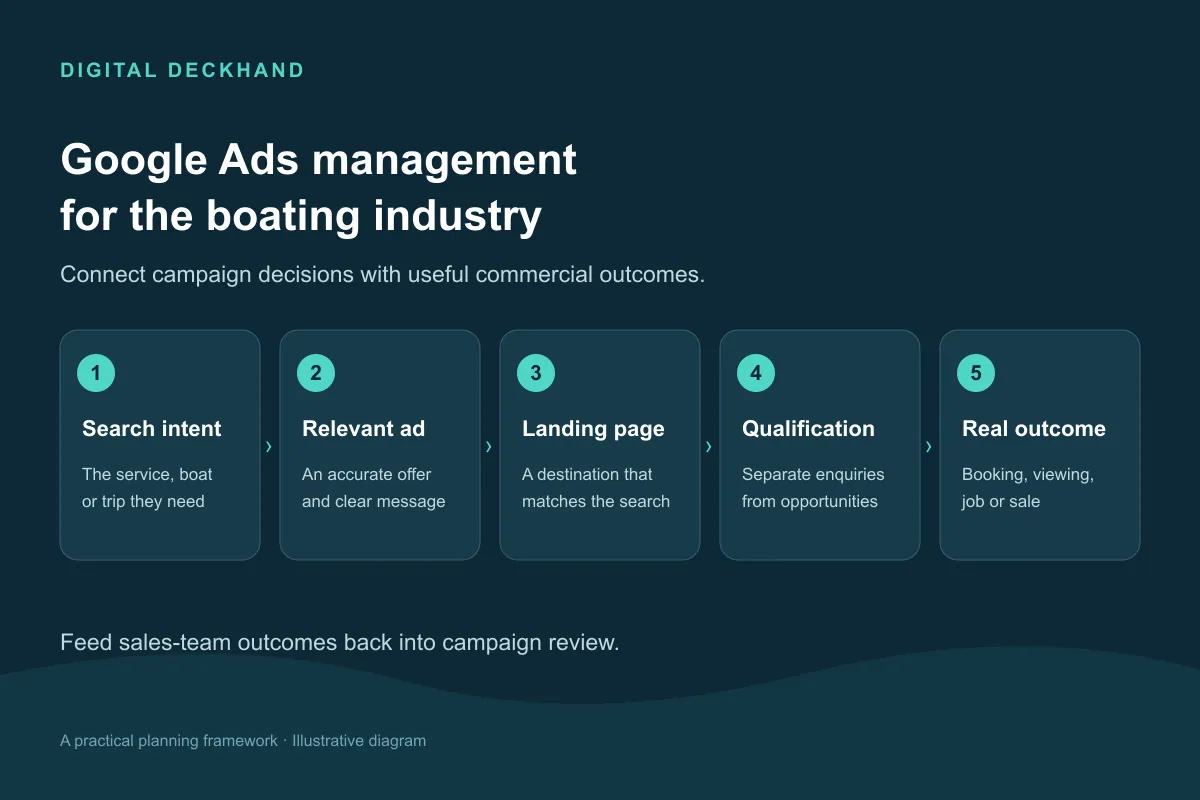
Use campaign tags and a consistent enquiry source field to connect activity with the initial response. Then track whether conversations become qualified opportunities, demonstrations or sales through your own records.
Compare the results with the goal you chose at the start. Let that evidence guide the next campaign. Recheck event details with the organiser whenever you update a dated article or plan a new edition.